
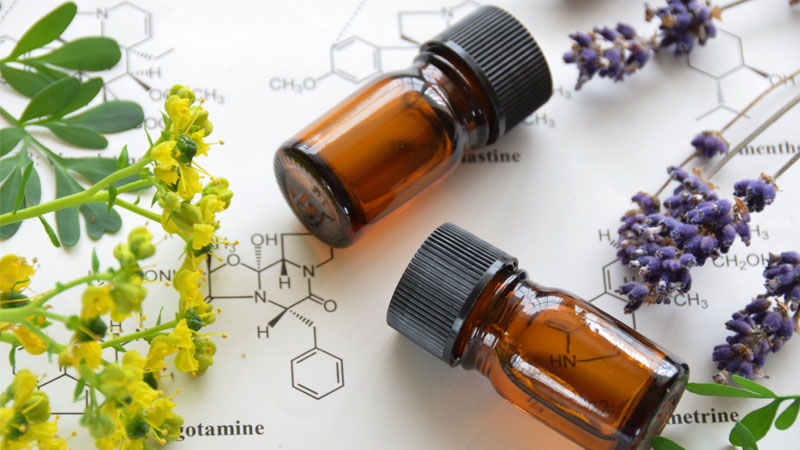
Essential oils are organic compounds derived from fragrant plant assets such as roots, bark, plant life, leaves, and seeds.
They are extremely complicated substances, with each oil usually containing several hundred character chemicals, with the sizeable majority at levels of less than 1%. These chemical substances work collectively as a complete synergistic unit to maximize the effectiveness of the oil.
An oil’s chemical materials dictate its fragrance, taste, and healing properties, and an unmarried oil will have many distinct uses thanks to its complex chemical profile. Understanding the chemistry with Young Living can therefore assist you in getting the most from your essential oils and give you a better know-how of which oils to apply and any protection issues.
Essential oil composition
A common, important oil contains several hundred chemical substances, with the great majority at degrees of less than 1%.
The chemical substances in a vital oil usually have hydrogen, carbon, and oxygen as their building blocks and can be divided into three major classes: -Hydrocarbons
These contain the simplest carbon and hydrogen. This group is made up almost exclusively of terpenes—monoterpenes and sesquiterpenes.
From hydrocarbons, a plant could make the second fundamental institution—oxygenated compounds.
Oxygenated compounds
A plant makes oxygenated compounds from hydrocarbons, particularly esters, aldehydes, ketones, alcohols, phenols, and oxides.
Some oils, along with pine, are ruled through hydrocarbons, whereas others, together with clove, incorporate specially oxygenated compounds. It is the oxygenated parts that typically determine the oil’s aroma and flavor. They additionally provide them with a little solubility in water and significant solubility in alcohol (Tisserand & Balacs 1995).
The main compounds determined in essential oils
The fundamental chemical households are mentioned below. Please note that the chances indexed towards the oils are taken from Essential Oils in Color (Caddy 1997) and are averages based totally on extensive ancient information and the effects of masses of GC reports (gas liquid chromatography), which analyze the chemical make-up of an oil.
Monoterpenes
This is the most important chemical circle of relatives determined in essential oils. Monoterpenes are determined in nearly every vital oil and encompass limonene (citrus oils) and pinene (pine/fir/Juniperberry). They have a totally small, mild molecular structure, are extraordinarily unstable (evaporate quickly), are unfastened flowing (no longer viscous), and feature a strong aroma.
Safety: May be nerve-racking to the skin, especially if oxidized.
Sesquiterpenes
Sesquiterpenes are much less unusual in essential oils. Their molecules are bigger and heavier, making them slightly stronger than monoterpenes. In this manner, they take longer to evaporate and feature an extended shelf- life. Many oils with high levels of sesquiterpenes are derived from roots, wood, or plant life in the Asteraceae family and have grounding and balancing effects.
Alcohols
Alcohols and plant alcohols are both derived from monoterpenes (monoterpenols). Or, to a lesser volume, sesquiterpenes (sesquiterpenols). Alcohols are commonplace in most crucial oils and are the most beneficial molecules in aromatherapy. They are powerful yet gentle, typically pretty fluid, with satisfactory aromas that are nicely tolerated. They are commonly used for their antiseptic and ache-relieving properties (physical and emotional).
Phenols
Phenols are the strongest, most irritating compounds and are gradual to evaporate (giving them extra opportunity to penetrate the tissues). They are very chemically energetic, with a distinct aroma (which reminds me a bit of petrol). Phenols have a tendency to have powerful bactericidal properties and a strongly stimulating effect.
Safety: Oils rich in phenols are irritating to the pores, skin, and mucous membranes. Only use in low dilution and for short periods of time. Always blend with alcohol-rich oils. Avoid pregnancy.
Aldehydes
Aldehydes are the most recognizable aspect, as they’ve got a mighty citrus-like scent that’s a key contributor to an oil’s overall aroma. They are pretty volatile and at risk of oxidation.
Safety: Oils high in aldehydes need to be used in low dilution (1%) as they may be nerve-racking to skin and mucous membranes.
Ketones
Some of the most not unusual toxic compounds are ketones (e.g., thujone, pulegone), and that is why oils such as Thuga and Pennyroyal are avoided in aromatherapy. Not all ketones are toxic, but some have super therapeutic benefits, particularly when it comes to the higher respiration system, for alleviating congestion and assisting the release of mucus. Ketones are exceptional in their fragrance and frequently share a potent, minty-camphoraceous odor. They are surprisingly penetrating and should be used with care.
Safety: They should be used with care as they can build up within the body. Note contraindications for every person and take unique care in the course of being pregnant.
Esters
Esters are probably the most considerable organization observed in important oils; there aren’t many oils that don’t have an ester content. They have an intensely fruity aroma and are commonly non-toxic and gentle in motion, making them perfect to be used with the younger, antique, or infirm. Esters are a go-to element; they have so many healing benefits but are especially accurate for relaxation and balancing the temper.
Safety: Sweet Birch and Wintergreen include high ranges of methyl salicylate that’s thought to be more effective than aspirin. Both oils have severe protection concerns and should be used with extreme care.
Oxides
Oxides have the strongest aromas of all the molecules and are my favorite components—bracing and respiration! The maximum commonplace oxide is 1,8-cineole, additionally referred to as eucalyptol. Found in the maximum varieties of Eucalyptus oil and other camphoraceous oils, inclusive of rosemary, tea tree, and cajeput, cineole is in a class of its own, with its mighty expectorant residences and specific scent. Oxides are drying molecules that do away with dampness from an area, making them an ideal choice for respiration problems.
Safety: Cineole can be harmful to pores, skin, and mucous membranes.
Conclusion
Knowledge of the intricate chemistry of essential oils with Young Living is important for maximizing their advantages and ensuring secure usage. From monoterpenes to oxides, every chemical factor contributes to the aroma, flavor, and healing properties of important oils. By gaining this knowledge, customers can harness the power of nature for holistic well-being efficiently.